
Each person living with dementia displays different symptoms, and dementia care isn’t one-size-fits-all. This means that knowing when to look into memory care communities can be difficult. Consulting a medical professional will always be key when determining the most supportive path forward for your loved one. Once the time is right, the staff here at Branchlands is trained to help you with the process of moving your loved one into memory care. We offer assessments for individuals with dementia to determine if your loved one is ready for the Linden House Memory Care community. Before contacting us, be on the lookout for these seven signs someone is ready for memory care.
1. Neglecting personal hygiene
Does your loved one struggle with their daily hygiene? Do they not recognize the bottle of shampoo or try using toothpaste to shave? If they require constant guidance during routine hygiene tasks, it may be time for the continuous support of a memory care community. At Branchlands, we provide assistance with personal care and hygiene that ensures your loved one stays safe and comfortable. For instance, their showers are equipped with handrails and attentive staff are there to help them bathe and wash their hair.
2. Not managing daily living activities
If your loved one struggles to manage bills, maintain their home, or navigate safety hazards like leaving the stove on, it may be time for additional support. While we generally recommend our assisted living community for those with physical limitations, cognitive decline that affects daily safety and home management often signals your family member is ready for specialized memory care.
3. Changes in mood and behavior

Dementia affects everyone differently, but many experience “sundowning:” increased confusion or agitation in the late afternoon and early evening. These mood changes are often triggered by fatigue or fading light, making specialized evening support essential for comfort and safety. The Mayo Clinic offers suggestions to help reduce sundowning.
For some, dementia brings about changes in mood and behavior, including agitation or aggression toward others. These shifts often happen because the person is losing their natural sense of social propriety and impulse control. This type of erratic behavior can make it difficult or impossible to leave them alone at home.
4. Forgetfulness or cognitive decline
When we notice someone forgetting things or repeating themselves on a regular basis, this is often the first sign that makes us wonder if our loved one has dementia. If your friend or family member can no longer remember vital details like their medications or the current year, it may be time for a higher level of support. Memory care communities like Branchlands offer the continuous, specialized care necessary to ensure their health and safety around the clock.
If you have concerns about cognitive decline, your doctor should be able to assist with assessment and care planning. The Alzheimer’s Association offers additional resources as well.
5. Experiencing physical challenges

Changing physical capabilities can also signal a need for memory care. If your loved one experiences issues like incontinence, increased fatigue, or a loss of balance — especially when combined with nighttime wandering — they may require the 24-hour safety and support of a memory care community. This is especially true if the caregiver is no longer able to safely help them with their hygiene and monitor their activities.
6. Unsafe being left alone
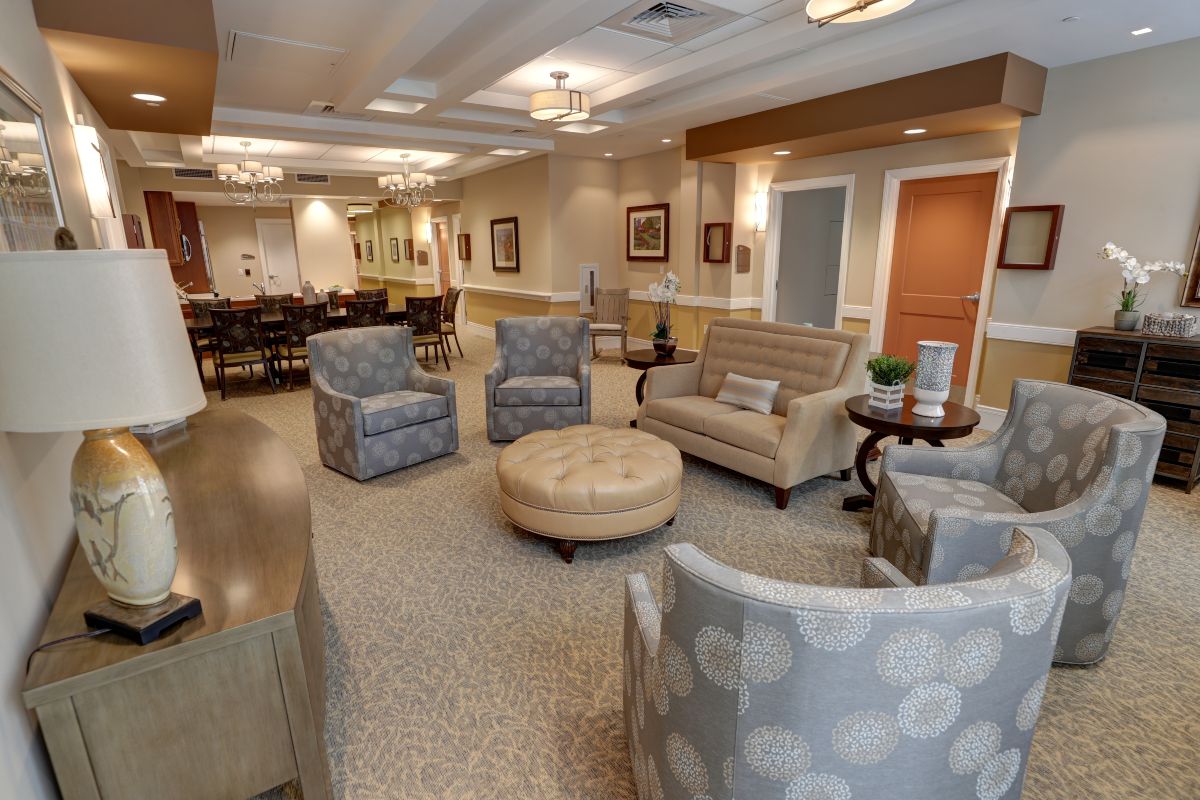
Seniors are increasingly vulnerable to falls as they age. If your loved one tends to wander or is losing their balance, it may be a sign it’s time for memory care. A fall could lead to a significant injury like a broken hip. If a person is disoriented and not sure where they are, it is no longer safe for them to be alone. Most memory care residences, like Branchlands, have staff watching over your loved one 24 hours a day. The “intentional design” of The Gardens Memory Care at Linden House fosters independence while ensuring safety and preserving dignity. To keep your loved one safe, we utilize colors and lights that help direct them away from the locked exit doors and into the inviting living spaces. We have created a central hub for each of our three memory care living units that resembles a home with a large gathering space where residents dine, participate in activities, and watch television together.
7. Mental and physical toll on the caregiver
Caring for another person is time-consuming and exhausting at any age, but particularly if the caretaker is an elderly person. Caregiver burnout is real and it is important to check in on a person’s caregivers to ensure their physical and mental well-being. Take a look at our Tips for Caregivers blog to learn more about how to best support those doing the supporting.
The Alzheimer’s Association has a 24-hour support hotline if you need answers right away. When a person feels like they can no longer take care of both themself and the person with dementia, memory care might be the solution.
–
If you are wondering if it’s time for your loved one to enter memory care, the staff at Linden House Assisted Living and Memory Care are here to answer your questions and discuss your situation. Please contact us and make an appointment to visit today.
Dementia Resources
For additional information, you can visit the following organizations online for more in-depth articles on dementia.
Alzheimers.gov
www.alzheimers.gov
Alzheimer’s Association
https://www.alz.org/
Alzheimer’s Foundation of America
https://alzfdn.org
Jefferson Area Board for Aging (JABA)
https://www.jabacares.org/
NIA Alzheimer’s and related Dementias Education and Referral (ADEAR) Center
www.nia.nih.gov/alzheimers
Photo by number 5 designed by Freepik
